Duggal Eye Hospital

Diabetic Retinopathy Screening Jalandhar | Duggal Eye

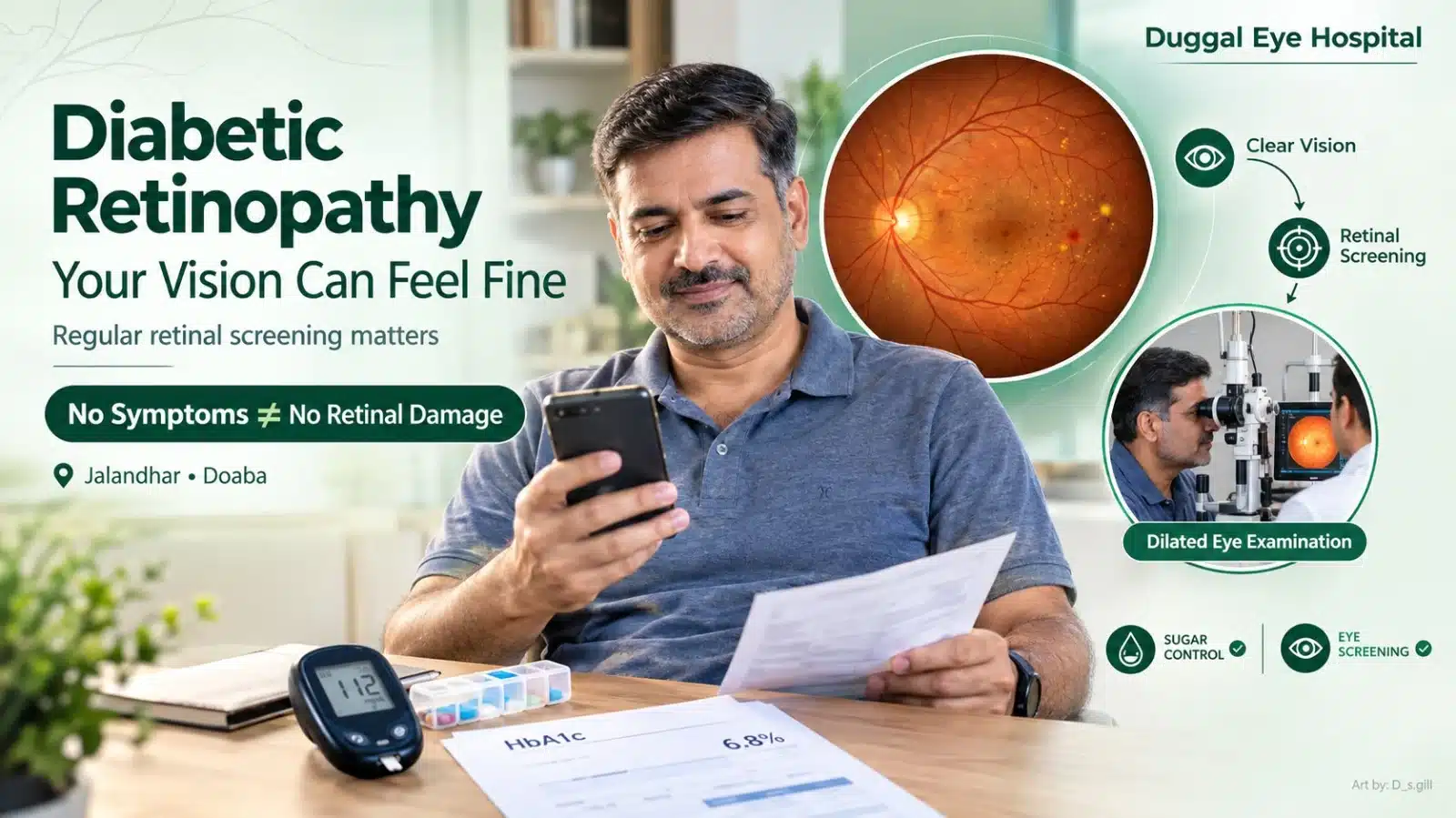
Rajinder Kumar in his early fifties, somewhere between Jalandhar and Nakodar, has been managing type 2 diabetes for close to a decade. He checks his blood sugar the way he’s been told to. He hasn’t missed an HbA1c test in years. His feet get checked at every diabetes review. But if you asked Rajinder, a textile business man when he last had a dilated eye examination — not a vision test at the optician, an actual dilated look at the retina — he would struggle to answer. Nobody ever told him it was urgent. And his vision, as far as he can tell, is fine.

That last sentence is the entire problem. Vision that “feels fine” and a retina that is silently bleeding are not mutually exclusive. That is precisely what makes this disease dangerous.

Diabetic patients are, on the whole, disciplined about the parts of their disease that come with numbers attached — sugar readings, kidney function, cholesterol. Almost none of them treat an annual eye exam with the same seriousness, because the eye doesn’t send a warning signal the way a wound on the foot does. That gap, between how carefully patients monitor the rest of their body and how casually they treat their eyes, is what this article is really about.

WHAT REALLY IS DIABETIC RETINOPATHY?

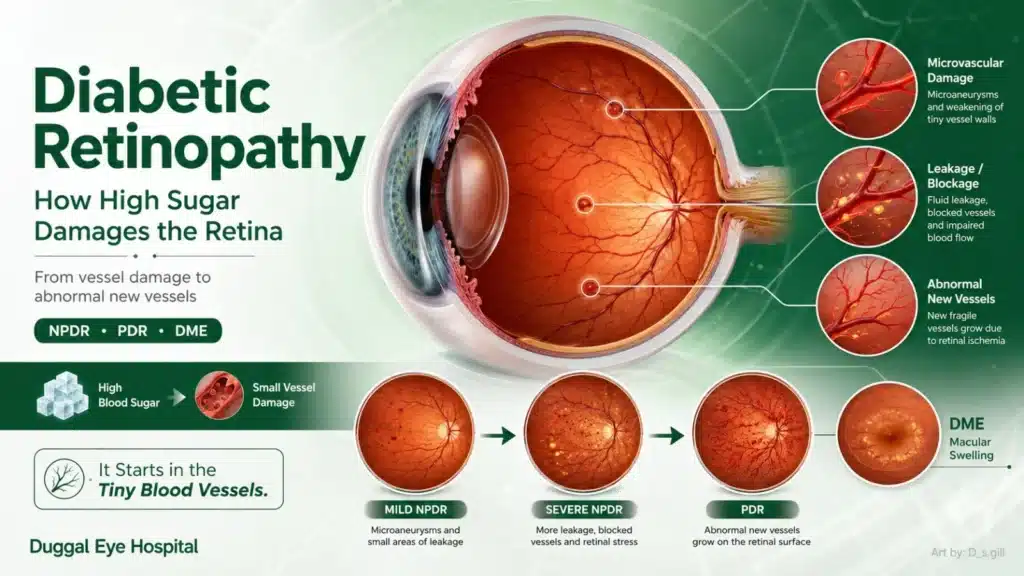
Diabetic retinopathy is damage to the retina’s small blood vessels caused by prolonged high blood sugar. It develops in stages — from mild non-proliferative retinopathy (NPDR), through moderate and severe NPDR, to proliferative diabetic retinopathy (PDR), where abnormal new vessels begin growing on the retina’s surface. A related complication, diabetic macular edema (DME), involves fluid swelling in the macula, the part of the retina responsible for sharp central vision, and can occur at any stage of retinopathy.

The underlying mechanism is straightforward to describe, even if the disease itself is not: elevated blood sugar damages the walls of the retina’s smallest blood vessels over years. Those vessels begin to leak, form microaneurysms, and in later stages become blocked, starving parts of the retina of blood supply. In advanced disease, the eye responds to that oxygen starvation by growing new, fragile blood vessels — which is precisely the stage where the risk of sudden, severe vision loss rises sharply.

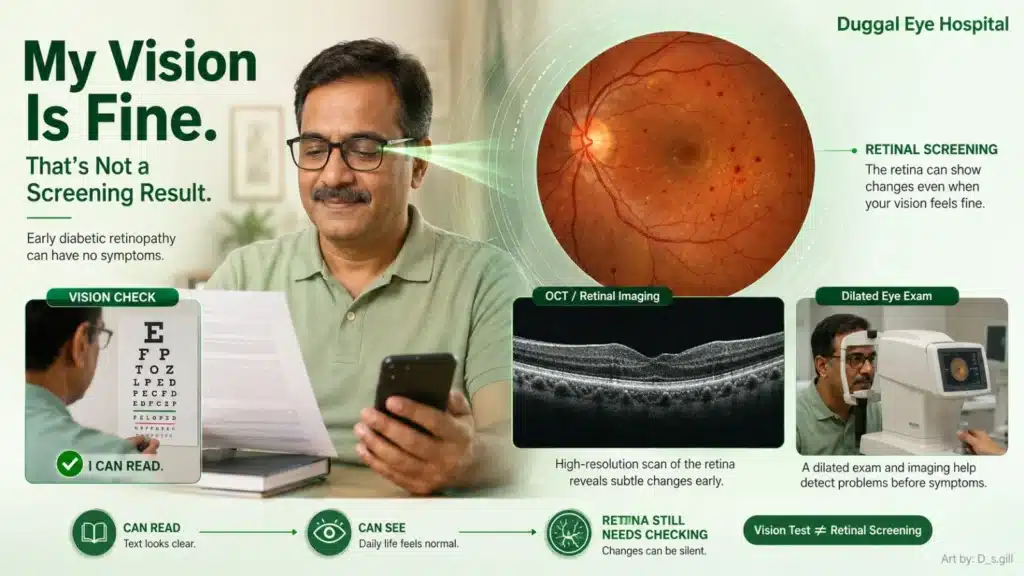
Why "My Vision Is Fine" Is Not a Screening Result

Screening Result

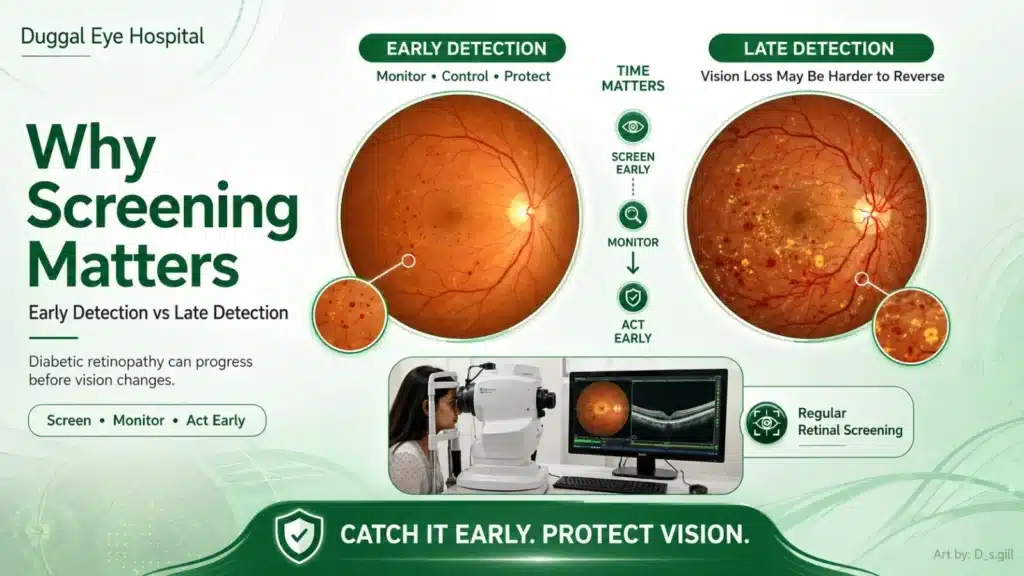
This is the single most important distinction in this entire article: what a patient reports about their vision and what a dilated exam or optical coherence tomography (OCT) scan actually shows are two different things. Mild and even moderate retinopathy frequently produce no symptoms at all. A patient can read fine print, drive at night, and pass an informal vision check while microaneurysms and early haemorrhages are already present on the retina. Subjective vision is not a screening tool. Only a dilated examination or retinal imaging is.

Why Screening Is Time-Sensitive, Not Optional

Why Screening Is Time-Sensitive

Early-stage diabetic retinopathy responds well to monitoring and risk-factor control. Advanced, untreated disease frequently causes vision loss that treatment cannot reliably reverse. That asymmetry — early detection works, late detection often doesn’t — is why screening frequency, not the sophistication of available treatment, is usually the variable that most determines whether a diabetic patient keeps their vision.

What Happens during a Diabetic Retinopathy Screening?

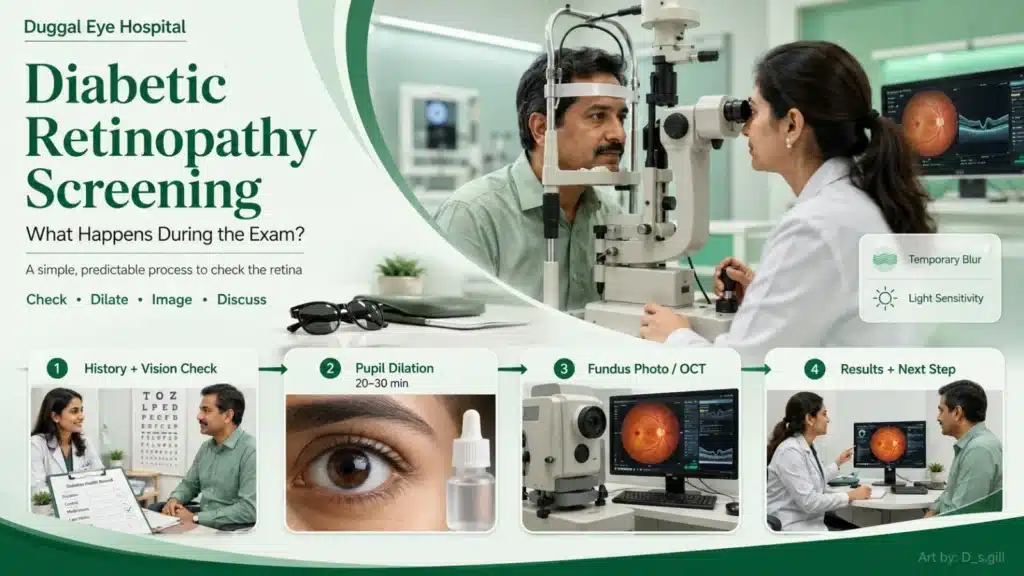
Part of why diabetic patients avoid this exam is simply not knowing what it involves. It is a longer, more thorough visit than a standard eye test, but it is not painful, and it follows a predictable sequence.
Diabetic Retinopathy Screening

The visit begins with a history of how long diabetes has been present and how glycaemic control has trended, followed by a visual acuity check. Eye drops are then used to dilate the pupils — this takes about 20–30 minutes to take full effect and causes temporary blurring and light sensitivity for a few hours afterward, which is why bringing sunglasses and, where possible, arranging not to drive immediately afterward is worth planning for. Once dilated, the retina is examined directly, often supplemented by fundus photography or OCT imaging to document findings precisely. The retinopathy, if present, is graded by severity, and the visit closes with a direct conversation about what was found and what happens next — whether that is a routine annual recall or a referral for closer monitoring or treatment.

Who needs Screening, and How often?

The guidance here is specific rather than vague, and it applies regardless of how good a patient’s vision currently feels.
diabetic scarring

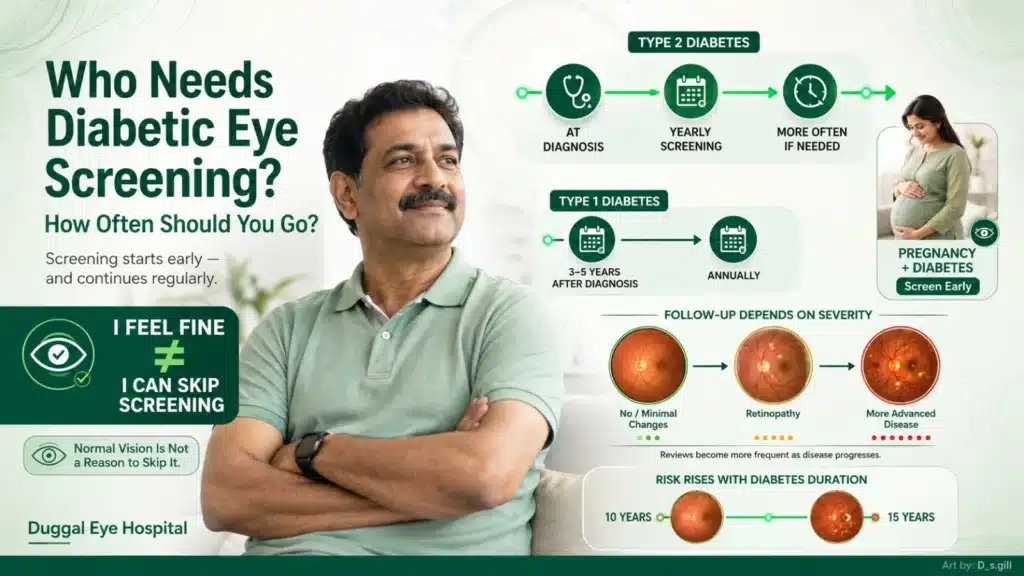
According to theIdnian Academy of Ophthalmology’s Diabetic Retinopathy Preferred Practice Pattern, patients with type 2 diabetes should have a first retinal screening at the time of diagnosis, and at least yearly thereafter. Patients with type 1 diabetes should begin screening within three to five years of diagnosis, then continue annually. Pregnant women with pre-existing type 1 or type 2 diabetes should be screened early in the first trimester, with closer follow-up through pregnancy, since pregnancy itself can accelerate retinopathy progression. Once retinopathy has been detected, the follow-up interval is set by its severity, not by a fixed calendar — more frequent review is needed if control is poor, if retinopathy is advancing, or if macular oedema is present.

Two additional facts are worth stating plainly. First, the risk climbs steeply with duration: published data indicates that after roughly ten years of diabetes, close to 60% of patients will show some degree of retinopathy, rising to around 80% by fifteen years. Second, and more troubling: the American Academy of Ophthalmology notes that only around 60% of people with diabetes actually receive their recommended yearly screening — meaning a substantial share of at-risk patients are, by definition, not being looked at closely enough, closely often enough.

I feel fine, so I’ll skip this year” is, in almost every case, exactly the reasoning that allows silent progression to continue unchecked.
Diabetic Retinopathy is a bigger risk in Punjab than most patients realize !

Diabetic Retinopathy

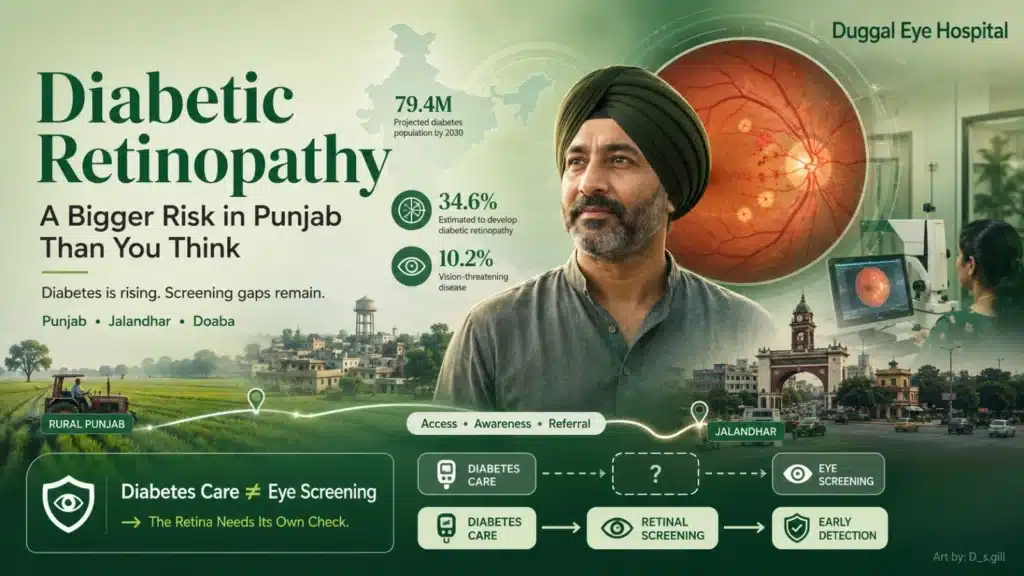
India’s diabetic population is projected to reach roughly 79.4 million by 2030. Of people living with diabetes nationally, an estimated 34.6% will develop some form of diabetic retinopathy, and 10.2% will develop vision-threatening disease — figures drawn from published ophthalmology research, not hospital marketing.

Reference
The 79.4 million / 34.6% / 10.2% figures above are drawn from a study published in the Indian Journal of Ophthalmology and should be re-verified against the primary source and current citation before this article is published, with the citation included in the final piece.

What matters locally is not just the scale of India’s diabetes burden, but the documented gap between diagnosis and actual eye screening. A qualitative study specifically examining barriers to diabetic retinopathy screening in public health facilities in Punjab and Chandigarh — built on interviews with people living with diabetes as well as retina specialists, ophthalmologists, optometrists, medical officers, and community health workers — found that limited awareness, weak referral pathways from diabetes care into ophthalmology, and rural-urban access gaps all contribute to diabetics going unscreened for years despite a confirmed diagnosis.

Reference
The Punjab/Chandigarh screening-barriers study referenced above establishes that this research exists and covers the region; it does not provide a specific Jalandhar-level or hospital-level prevalence percentage, and none should be invented. If a specific regional statistic is required for publication, it must be sourced directly from the study itself before inclusion.

The practical consequence is straightforward: a meaningful proportion of Punjab’s diabetic population, including in and around Jalandhar, has likely gone years without a dilated retinal exam — not through negligence, but because no part of their regular diabetes care routine has clearly directed them to one. A structured, accessible diabetic retinopathy screening programme in Jalandhar is a direct answer to a documented regional gap, not a generic service line.

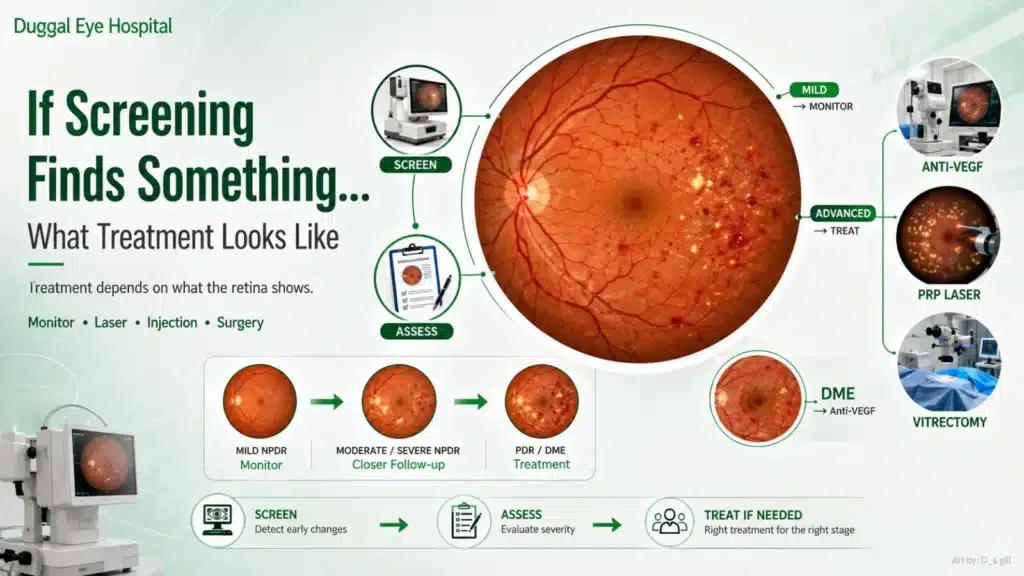
If retina screening finds something — what treatment actually looks like !

retina screening
Mild NPDR is typically managed through monitoring, with an emphasis on optimising blood sugar and blood pressure control, and a shorter recall interval. Moderate to severe NPDR calls for closer monitoring and, depending on findings, may warrant earlier intervention. Proliferative diabetic retinopathy (PDR) is generally managed with anti-VEGF intravitreal injections and/or panretinal photocoagulation (PRP) laser, aimed at halting the growth of abnormal new vessels. Diabetic macular oedema, when present, is most often managed with anti-VEGF therapy as the primary approach. In advanced or complicated disease — for instance, where bleeding into the vitreous has occurred — vitrectomy surgery may be required.
On what treatment can and cannot promise
Treatment can slow or halt the progression of diabetic retinopathy and, in many cases, preserve remaining vision — but it does not reliably reverse vision already lost to advanced, untreated disease. This is precisely why early detection carries more weight than any treatment technology available today.

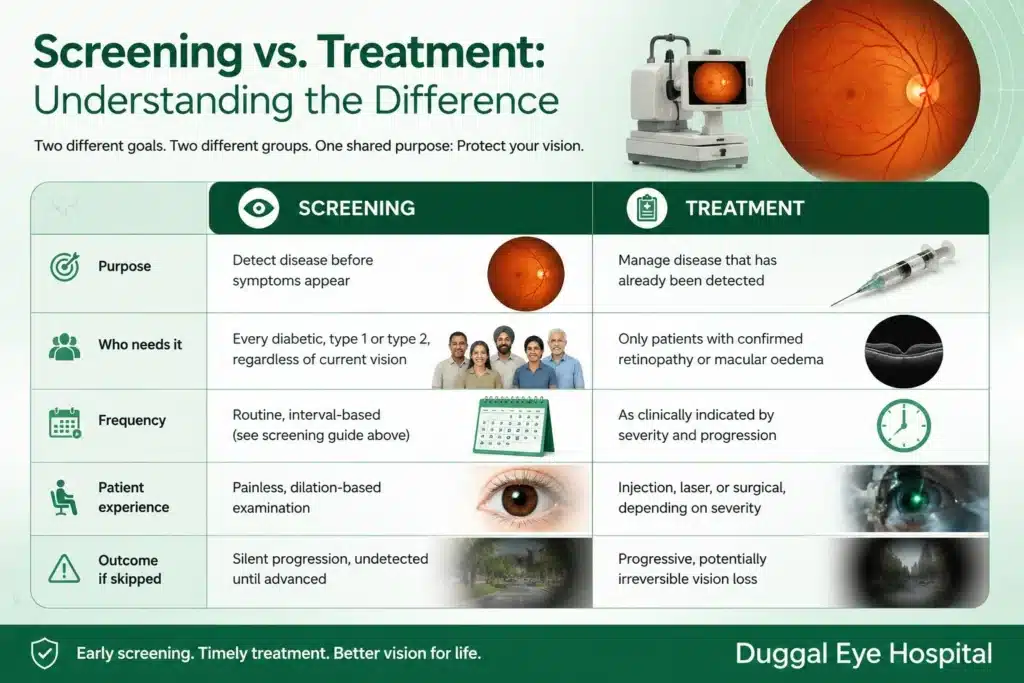
Screening vs. Treatment: Understanding the Difference

Screening vs. Treatment

These two words get used almost interchangeably by patients, but they describe two entirely different clinical activities, aimed at two different groups of people.

Screening Treatment
Purpose Detect disease before symptoms appear Manage disease that has already been detected
Who needs it Every diabetic, type 1 or type 2, regardless of current vision Only patients with confirmed retinopathy or macular oedema
Frequency Routine, interval-based (see screening guide above) As clinically indicated by severity and progression
Patient experience Painless, dilation-based examination Injection, laser, or surgical, depending on severity
Outcome if skipped Silent progression, undetected until advanced Progressive, potentially irreversible vision loss

Why Jalandhar and Doaba patients are choosing Duggal Eye Hospital for diabetic eye care?

Duggal Eye Hospital, Jalandhar is an NABH-accredited super-specialty eye hospital, operational for over two decades, under the clinical leadership of Dr Sanjeev Duggal, MS Ophthalmology. For diabetic patients across Jalandhar and the wider Doaba belt — Hoshiarpur, Kapurthala, Phagwara, Nakodar, Adampur, Phillaur and Kartarpur — the practical value of a dedicated diabetic retinopathy screening programme is straightforward: a documented regional access gap exists, and closing it starts with making the screening itself easy to get to, easy to understand, and easy to act on.

According to Dr Sanjeev Duggal, Lead Eye Surgeon at Duggal Eye Hospital, Jalandhar, the patients at greatest risk are often the ones who feel the least urgency — those whose sugar control looks reasonable on paper and whose vision, subjectively, has not changed. That is exactly the profile in whom retinopathy is most easily missed without a dedicated screening visit.

What to Expect at Your First Screening Visit

Bring a record of how long diabetes has been present, recent HbA1c readings if available, and a list of current medications, particularly for blood pressure and cholesterol, since both influence retinopathy risk. Expect the visit to run 45–60 minutes once dilation is included, and arrange transport home if possible, since driving immediately after dilation is not advisable. Most importantly, come with the expectation that a normal result is a genuinely useful outcome — it simply means the next screening is a year away, not that the visit was unnecessary.

The first step is not treatment. It is finding out, with certainty, what your retina actually looks like right now.

Screening vs. Treatment — Reference Table

Screening Treatment
Purpose Detect disease before symptoms appear Manage disease that has already been detected
Who needs it Every diabetic, type 1 or type 2, regardless of current vision Only patients with confirmed retinopathy or macular oedema
Frequency Routine, interval-based As clinically indicated by severity and progression
Patient experience Painless, dilation-based examination Injection, laser, or surgical, depending on severity
Outcome if skipped Silent progression, undetected until advanced Progressive, potentially irreversible vision loss

Frequently Asked Questions

Does normal vision rule out diabetic retinopathy?

No. Mild and even moderate retinopathy frequently cause no noticeable symptoms. Normal subjective vision does not mean the retina is unaffected — only a dilated exam or imaging can confirm that.

How long does pupil dilation last?

Blurring and light sensitivity typically last a few hours. Sunglasses help, and avoiding driving immediately afterward is advisable.

Is diabetic retinopathy screening painful?

No. It involves dilating eye drops and a light-based examination or imaging. There is no injection or incision involved in screening itself.

How soon after a diabetes diagnosis should screening start?

For type 2 diabetes, at the time of diagnosis. For type 1 diabetes, within three to five years of diagnosis, per American Academy of Ophthalmology guidance.

Is diabetic retinopathy more urgent during pregnancy?

Yes. Pregnancy can accelerate retinopathy progression in women with pre-existing diabetes, which is why screening is recommended early in the first trimester with closer follow-up.


I’m on tablets, not insulin — do I still need screening?

Yes. Screening recommendations are based on having diabetes and its duration, not on whether it is managed with tablets, insulin, or diet alone.

If my HbA1c is well controlled, am I protected?

Good glycaemic control meaningfully reduces risk but does not eliminate it. Screening remains necessary regardless of how well-controlled blood sugar is.

What does an OCT scan involve?

Optical coherence tomography is a quick, non-contact imaging scan that produces a detailed cross-sectional view of the retina, often used to detect or monitor macular swelling.

Does one normal screening mean I’m permanently safe?

No. Diabetic retinopathy can develop or progress over time, which is why annual screening is recommended even after a normal result.

What happens if screening finds early changes?

Early changes are typically managed with closer monitoring and a focus on glycaemic and blood pressure control, rather than immediate treatment — the approach depends on the specific grade found.

Can diabetic retinopathy be reversed?

Treatment can often halt or slow progression and help preserve remaining vision, but it does not reliably reverse vision already lost to advanced disease — which is why early detection matters more than any single treatment technology.

What does diabetic retinopathy screening or treatment cost?

Cost depends on the screening method used, whether treatment is required, and the specific technology involved. The first step is a screening visit to establish what, if anything, is actually present.

Medical Disclaimer
This article is intended for general information and does not replace individual medical advice. Diabetic retinopathy screening needs, findings and treatment recommendations vary by patient and can only be determined through a comprehensive eye examination by a qualified ophthalmologist. If you have diabetes and have not had a recent dilated eye examination, consult an eye care professional to arrange one.

Leave a Comment