
There is a particular moment a lot of families in Punjab’s Doaba belt know well: someone’s father mentions, almost in passing, that the tube light at home seems weaker than it used to. Or a mother visiting from Canada for a wedding says the ‘mehendi’ patterns looked strangely faded this time. Nine times out of ten, it is not the bulb, and it is not the light. It is cataract — motiabind, as most households here already call it — and “motiabind ka operation” is usually the very next thing typed into a phone. It happens to be one of the most fixable problems in medicine.
What is less well understood is that cataract surgery today involves two separate decisions, not one. The first is how the surgery itself gets done — and Jalandhar patients now have access to standard, femto, and robotic-assisted options, all under one roof. The second, and the one that actually shapes daily life afterward, is which artificial lens replaces the cloudy one. This piece is about both, and about what changes when the two intersect.
The operation takes twenty minutes. The lens you choose stays with you for the next twenty years — which is exactly why it deserves more thought than the operation itself.
Cataract, in Plain Terms !
The eye’s natural lens sits behind the iris and focuses light onto the retina, much like a camera lens. With age — and sometimes earlier, from diabetes or long-term steroid use — that lens clouds over. Colours dull, night driving gets harder, and reading needs better and better light. Surgery removes the clouded lens entirely and replaces it with a clear artificial one, called an intraocular lens or IOL. It stays put for life; there is nothing to service or replace down the line.
Three Ways the Surgery Itself Gets Done
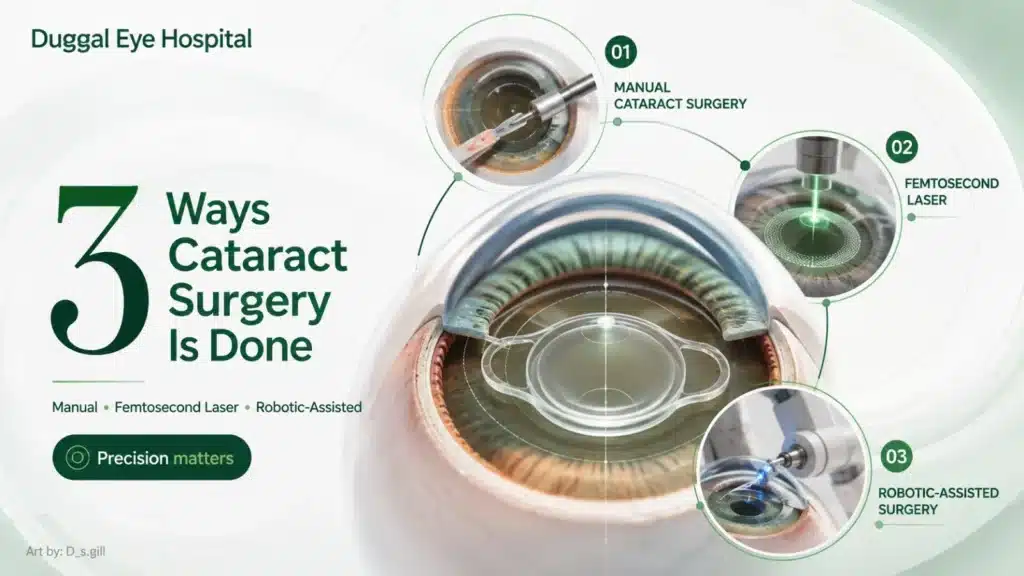
Not every cataract operation is performed the same way, and the technique chosen can influence how precisely a lens sits once it’s in. Duggal Eye Hospital offers all three of the approaches below, which is not something every hospital in the region can say.
Femtosecond laser assistance, in particular, is worth understanding if a premium or toric lens is on the table. The laser creates a more precise, perfectly centred opening in the lens capsule than a manual blade typically achieves — and centration accuracy matters more for lenses like multifocal or toric IOLs, where even a slight tilt can affect the sharpness of vision. Robotic-assisted surgery takes this a step further for more complex or exacting cases.
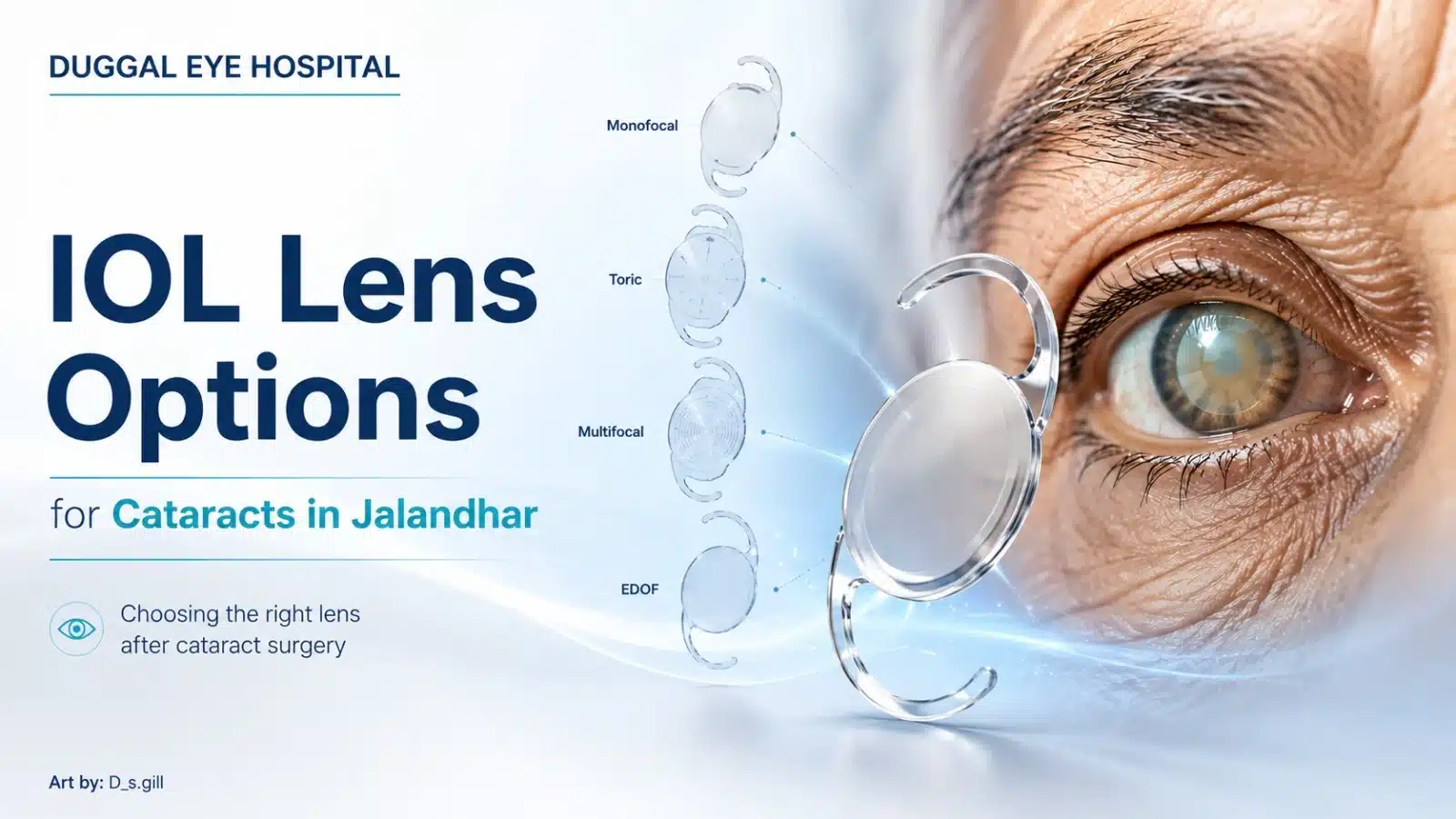
The Lens Itself: Your Options
Once the cataract is out, the question becomes which replacement lens goes in. This is where most of the actual decision-making happens — and where a good conversation with your surgeon matters more than any brochure.
Monofocal IOL
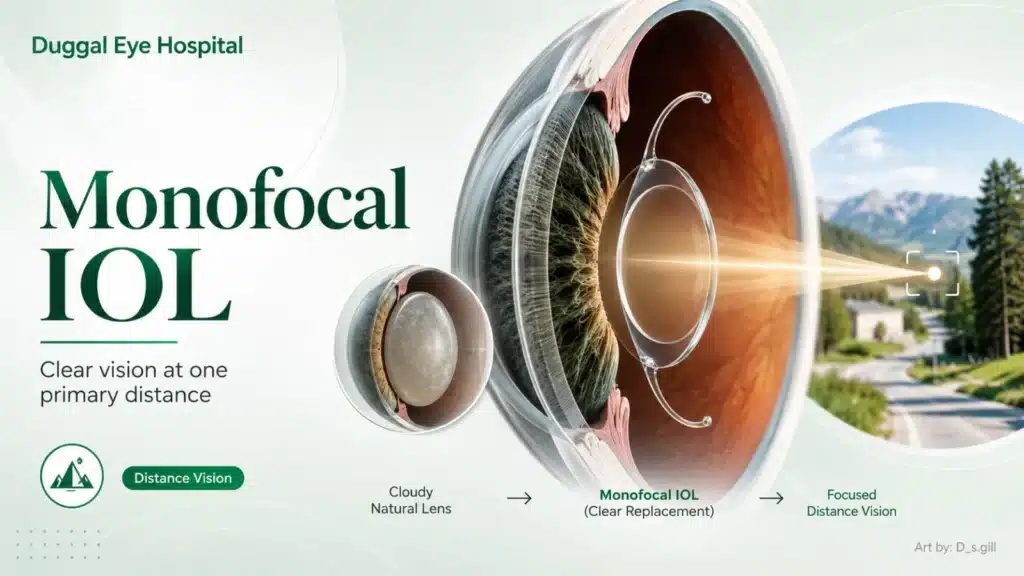
The standard, most widely implanted lens worldwide. It focuses sharply at one distance, almost always set for far vision, which means reading glasses are usually still needed afterward. Well-tested, dependable, and the right call for a great many patients, particularly those without significant astigmatism.
Toric Monofocal IOL
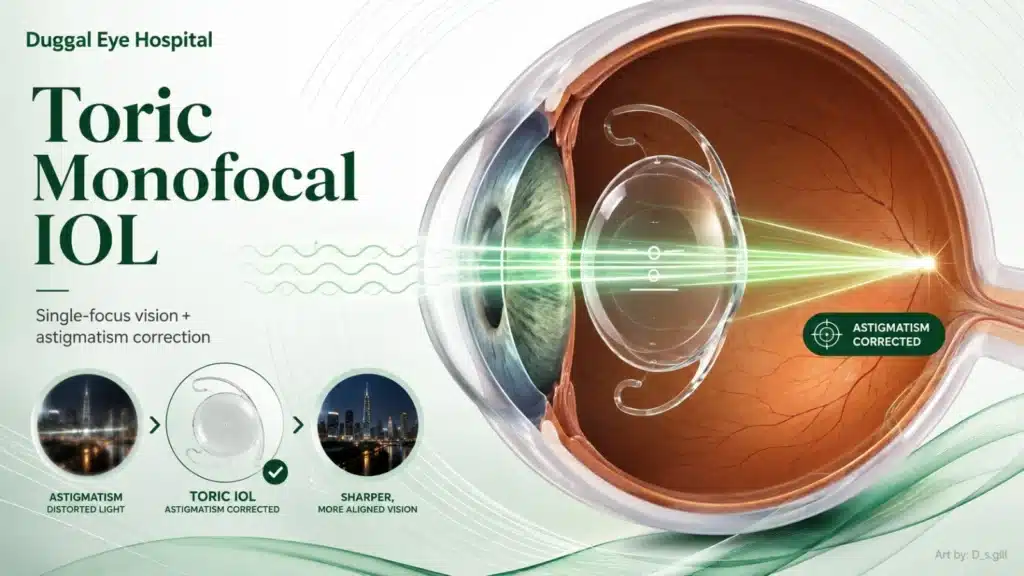
For eyes with meaningful astigmatism, where an unevenly curved cornea blurs vision at every distance rather than just up close. A regular monofocal lens cannot correct that curvature; the toric version is shaped specifically to. Precise centration matters here, which is one reason femto-assisted surgery is often discussed alongside a toric lens.
Multifocal IOL
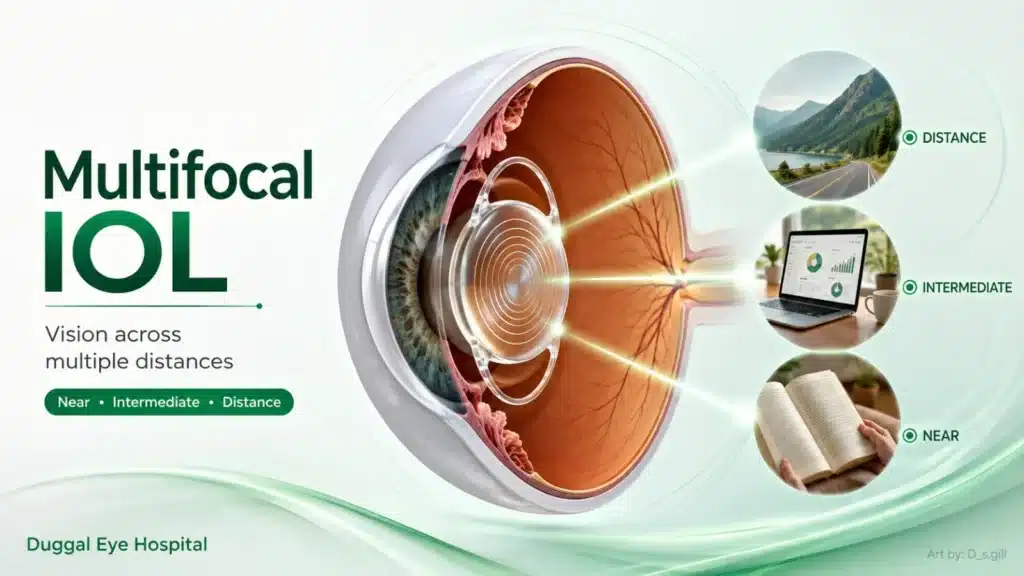
Built with more than one focusing zone, letting the eye shift between near and far without constantly switching glasses. Many patients find this genuinely liberating. A minority notice glare or halos around lights at night, especially in the early months — something worth discussing honestly before deciding, rather than after.
Trifocal IOL
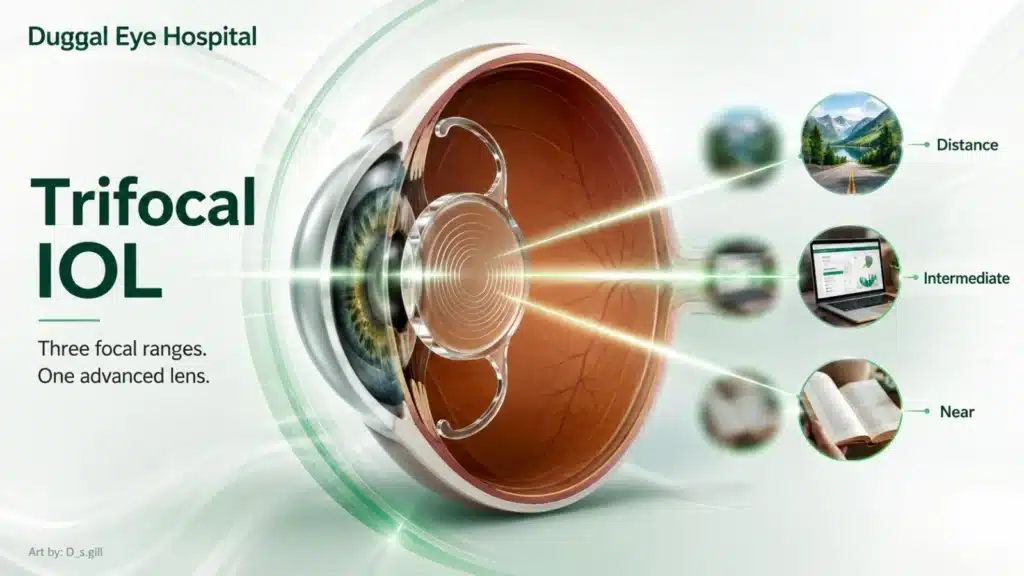
Adds a third zone for intermediate distance, roughly where a phone or a car dashboard sits. Patients who spend real time on screens, or who drive frequently, often find this middle zone more useful in practice than it sounds on paper. The trade-offs around night glare are similar to multifocal lenses and vary by individual.
EDOF IOL (Extended Depth of Focus)
Rather than distinct near-intermediate-far zones, EDOF lenses aim for one smooth, extended range of focus. This often means fewer night-time glare complaints than multifocal or trifocal designs, at the cost of slightly less sharpness for very fine close-up work. Whether that trade suits you depends on your eyes and your daily habits, best assessed in person.
What This Tends to Cost
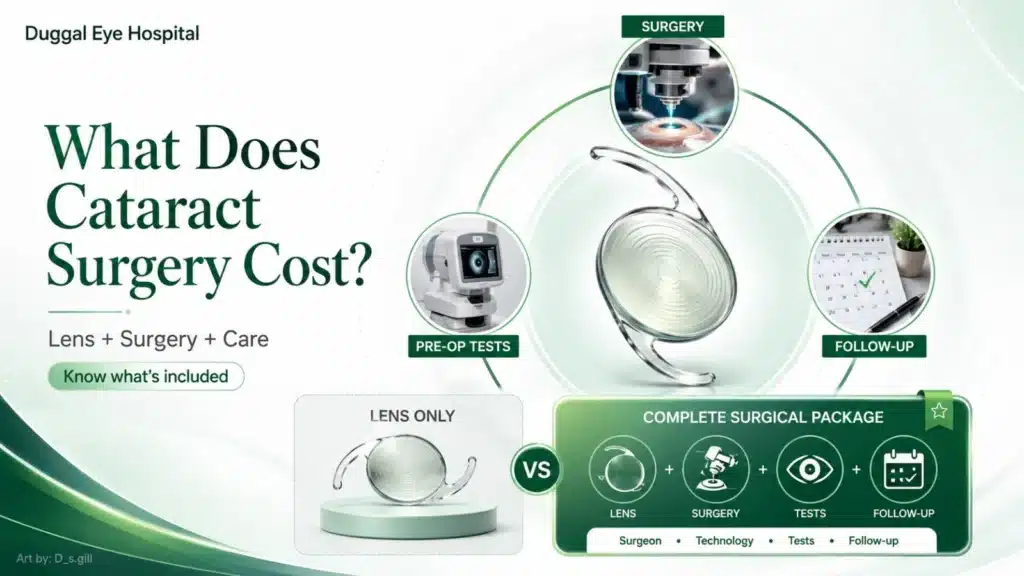
Lens pricing depends on the technology inside it, the brand, whether astigmatism correction is needed, and which surgical technique — standard, femto, or robotic — is used alongside it. Rather than repeat pricing details here, we would point you to our dedicated guide on cataract and motiabind surgery cost, which covers this in full and stays current. What is worth understanding upfront, wherever you read about pricing, is whether a figure covers the lens alone or the complete surgical package — surgeon’s fee, technology charges, pre-operative tests, and follow-up visits included. That single distinction explains most of the confusion patients run into when comparing quotes.
Who Tends to Choose Which Lens
Jalandhar and the wider Doaba belt have a particular patient mix — a large NRI population visiting for short windows, farmers and shopkeepers with very different daily demands on their eyes, and a growing number of screen-heavy office jobs. A rough sense of how that plays out in real consultations:
None of this is a substitute for an actual eye examination — it is simply a better starting point for that conversation than walking in with no framework at all.
Cataract & IOL Care Across the Doaba Belt
Duggal Eye Hospital has treated patients from Jalandhar, Punjab, and northern India for close to three decades, alongside a steady flow of NRIs who plan cataract or LASIK surgery around a visit home. For anyone searching “cataract surgery in Jalandhar” or “motiabind ka ilaj near me,” the hospital sits right on the GT Road corridor at Kishanpura Chowk, with patients regularly travelling in from across the Doaba belt.
What to Expect at Your Consultation
A full eye examination, biometric measurement to calculate the correct lens power, a review of your general eye health, and an honest conversation about your daily routine — driving, screen time, hobbies, travel plans. Only then does a specific lens and surgical approach get recommended, with a written estimate to take home.
About Dr. Sanjeev Duggal
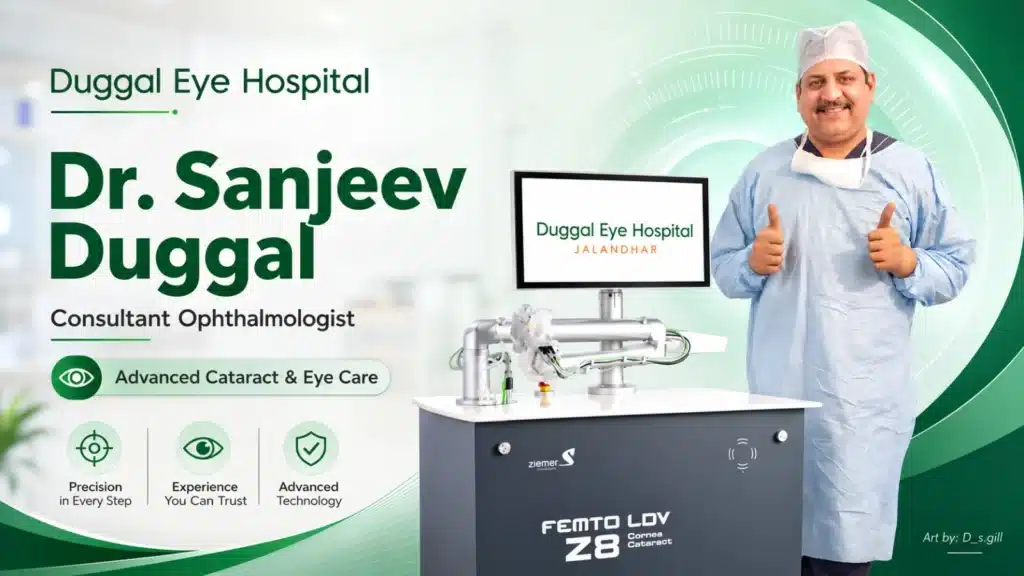
Dr. Sanjeev Duggal, MS Ophthalmology, is the Chief Eye Surgeon and founder of Duggal Eye Hospital, Jalandhar, with close to 30 years treating patients across Punjab and northern India. He is trained at the Singapore National Eye Centre and has performed cataract surgery across the full range of available technologies — standard phacoemulsification, femtosecond laser-assisted (FLACS), and robotic-assisted procedures — along with the complete spectrum of IOL types covered in this guide.
Frequently Asked Questions
Yes. Motiabind is the common Punjabi and Hindi term for cataract — the clouding of the eye’s natural lens — and it is treated through cataract surgery with IOL implantation, exactly as described throughout this guide. Searching “motiabind ka operation” or “cataract surgery” will both lead you to the same procedure.
There genuinely isn’t one lens that is best for every patient, whatever a hospital website might imply. Monofocal, toric, multifocal, trifocal, and EDOF lenses each suit a different combination of eye health, astigmatism, and daily habits. The honest answer to “which is the best IOL lens for cataract” is the one your surgeon recommends after examining your eyes — not the most expensive option on a list.
For a large share of patients, standard phacoemulsification works very well. Femto or robotic assistance tends to be discussed more seriously for premium or toric lens cases, or where extra precision genuinely changes the outcome. Your surgeon can tell you where you fall after an examination.
Most patients notice a real reduction in how often they reach for glasses, but no lens can promise zero dependence for every person. Your surgeon can give you a realistic picture based on your specific eyes.
This varies by lens type, surgical technique, and what exactly is included in the quote. Our dedicated cataract and motiabind surgery cost guide covers this in detail, and our team can walk you through a written, itemised estimate after your evaluation.
For life, in the vast majority of cases. There is no wear-and-tear replacement schedule the way there is with glasses or contact lenses.
Often, yes — this is a common situation for NRI patients here, and our team can help plan the evaluation, surgery, and follow-up schedule around a short visit home. It’s worth mentioning your travel window when you first get in touch.
Book Your Consultation
If questions about cataract, motiabind, or which lens suits you have brought you here, an eye examination is a far better next step than deciding in advance of one. Dr. Sanjeev Duggal and the team at Duggal Eye Hospital can talk you through your specific options — lens type, surgical technology, and realistic outcomes — in plain language. Clearer vision usually starts with one phone call, not a long search.
Call for an appointment: 7888352706
Email: duggaleyehospitaljalandhar@gmail.com
Duggal Eye Hospital & Lasik Laser Centre, Kishanpura Chowk, Jalandhar, Punjab 144001